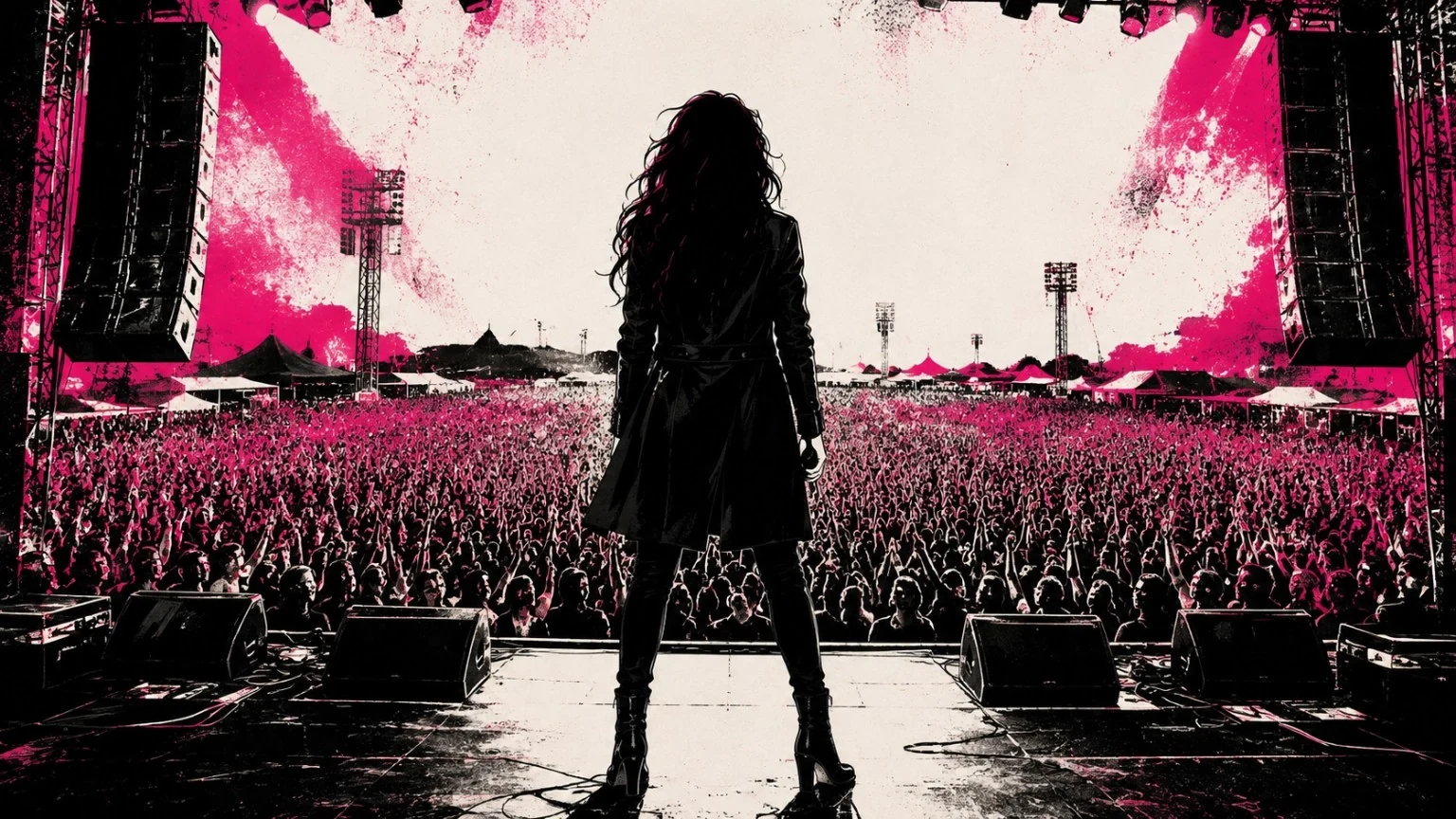
Maya Hart
A voice that shook the world.
A death that left too many questions.
August 18, 2012.
By the time Maya Hart stepped onto the Main Stage, Echo Fields had already been awake for nearly three days.
Forty thousand people packed the field in front of her. The heat had broken just before sunset, leaving the air heavy with dust, spilled beer, and the electric hum of a crowd waiting for the one name printed larger than every other on the festival poster.
Maya came out alone.
No introduction. No countdown.
Just the first note of her biggest song, followed by a roar loud enough to shake the lighting towers.
For the next forty minutes, nothing seemed unusual.
Witnesses later described her as focused. Energetic. Completely herself.
Between songs, she walked toward the edge of the stage, crouched beside a monitor, and picked up a metal flask.
Several photographs captured the moment.
Maya drank from it, set it back down, and returned to the microphone.
Less than ten minutes later, something changed.
She missed a lyric.
Then another.
Her guitarist glanced toward her. Maya waved him off.
The band kept playing.
A minute later, she stumbled.
At first, people in the crowd cheered. Some thought it was part of the performance.
Then Maya dropped the microphone.
She took two steps backward and collapsed.
The music stopped.
Security cleared the stage as medics rushed in. The audience was told there had been a medical emergency.
Maya Hart never returned.
By sunrise, Echo Fields had become something else entirely.
Not a festival.
A crime scene no one yet believed was a crime scene.
For fourteen years, the official story never changed.
Maya Hart had been exhausted.
It had been hot. She had spent weeks touring. Early reports mentioned dehydration, stress, and a possible undiagnosed medical condition.
No evidence of foul play was found.
The case was closed.
The flask disappeared into storage along with hundreds of other items collected from Echo Fields.
Then, in 2026, it surfaced again.
An auction house outside London listed it simply as:
The listing went viral within hours.
A private collector bought it.
Before displaying it, he sent the flask for authentication.
The laboratory confirmed what everyone expected. Age, material, residue, handling marks.
Then one technician noticed something that had never appeared in the original file.
A trace.
Small enough to have been missed in 2012.
Specific enough that it should not have been there.
The auction was suspended. The flask was seized. The original evidence records were reopened.
Investigators returned to the Echo Fields archive.
Staff lists.
Artist passes.
Security logs.
Vendor records.
Backstage credentials.
Guest registrations.
Thousands upon thousands of names tied to a single weekend in August 2012.
Most had never been questioned.
Some had never even been identified.
Fourteen years after Maya Hart collapsed in front of forty thousand people, the case was officially reopened.
Someone at Echo Fields knew what happened.
And somewhere in the records, their name was still waiting.